
According to Islamic tradition, the place where God asked Abraham to sacrifice his son is located in Mecca. In Jewish tradition, this place is on Mount Moriah in Jerusalem, which is why the city was founded and developed there. These two traditions are clearly incompatible.
Quranic studies settle the question: not only can all descriptions attributed to Mecca also refer to Jerusalem—strongly suggesting that the Quran was originally about Jerusalem rather than Mecca—but the text also legitimizes the temple in Jerusalem by mentioning the presence of certain eminent Islamic figures and prophets within it.
This article by Odon Lafontaine attempts to make sense of the actual references to Jerusalem and Mecca in the Quran and the Islamic narrative in light of new Quranic studies. It has also been published on his Academia page and can be downloaded as a PDF file.
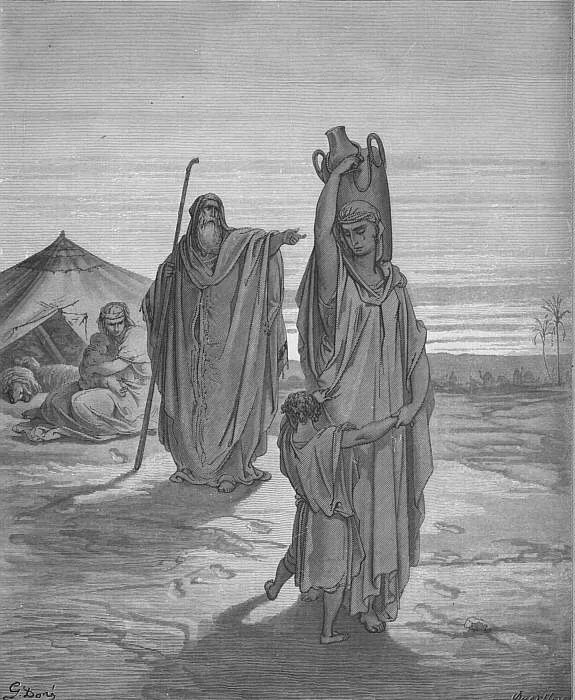
(Gustave Doré, engraving from 1866)
© utpictura18, reproduced here under the fair use principle for educational and informational purposes
Contents
- The Islamic tradition of the “place of Abraham” in Mecca
- The Jewish tradition of the “place of Abraham” in Jerusalem
- The contradiction of the Quran
- The common-sense hypothesis: Mecca’s “Abrahamic” status is a late invention
- Bibliography
- Notes
There are significant doubts regarding the historicity of Mecca, and indeed, many have raised such doubts. Numerous issues have been highlighted about its authenticity as the origin place of Islam, as described in Muslim tradition—the birthplace and site of its prophet’s preaching. This is especially relevant given the contradictions between the descriptions found in Islamic writings and Mecca’s actual physical features, such as its geography, climate, and resources[1]. Researchers have not found the ancient traces that this city, along with its caravanning and religious activities as a center of pagan pilgrimage—as described in Islamic tradition—should have left in pre-Islamic history, particularly in the writings of ancient authors[2].
Since nothing conclusive has been found outside of Islamic writings, it must be understood that these writings—especially the Quran, allegedly the earliest text—provide the primary evidence for the historicity of Mecca. This is all the more astonishing given that Islamic tradition claims Mecca is one of the oldest cities, with its sanctuary (at least the Kaaba) said to have been built (or rebuilt) by Abraham and his son Ishmael thousands of years ago. Islamic tradition also regards Mecca as the “place of Abraham” because the Quran appears to refer to it as such, suggesting that this is where God is believed to have asked Abraham to sacrifice his son. Yet again, the only evidence for this supposedly ancient tradition linking Abraham to Mecca is found solely in the Quran.
Quranic and historical studies have, however, definitively adressed the Quranic claim regarding Mecca. In 2005, Édouard-Marie Gallez suggested that the Quranic descriptions traditionally attributed to Mecca actually refer to Jerusalem[3]. According to Gallez, masjid al ḥarām would be the Temple Mount (Mount Moriah)—the original “place of Abraham” mentioned in the Quran where God asked him to sacrifice his son. The ḥajj would correspond to a form of Jewish pilgrimage in Jerusalem, and the claim that Abraham and Ishmael rebuilt the Kaaba in Mecca would instead refer to an Arab-Jewish alliance (“Abraham with the help of Ishmael”, as the Quran puts it in Q2,127) to rebuild the temple in Jerusalem. This event reportedly took place around 638, as multiple sources describe how such an alliance seized Jerusalem and rebuilt a temple on Mount Moriah[4]. Gallez’s pioneering work has since been supported by other researchers who also argue that the Quran refers to Jerusalem[5].
This suggests that Islamic tradition developed an alternative Mecca narrative to reinterpret the literal text of the Quran, attributing descriptions of the ḥajj, the “place of Abraham”, masjid al ḥarām, and other events and terms to Mecca rather than Jerusalem. Comparing such literal descriptions within the Quran pointing to Jerusalem with Islamic tradition about Mecca provides evidence of this reinterpretation process. Further evidence lies in the inconsistencies and contradictions within the Islamic interpretation of the Quran. Reinterpreting a text originally referring to Jerusalem as applying to Mecca indeed posed a formidable challenge. The new Meccan narrative needed to align consistently with the Quran’s 6,236 verses and its numerous literal descriptions of Jerusalem, its features and events related to the city. Many inconsistencies thus remained unaddressed.
The purpose of this article is primarily to highlight one of these inconsistencies, which leads to a major contradiction in Islam’s traditional account of Mecca: its status as the “place of Abraham”.
The Islamic tradition of the “place of Abraham” in Mecca
Islamic tradition interprets the mention of the “place of Abraham” in the Quran as referring to Mecca. This “place of Abraham” (maqām ibrāhīm) is clearly mentioned in two instances (Q2,125; 3,97[6]). It is described in the Quran as the place where Abraham “stood upright” before God, where he was tested and judged by him (also known as the “station of Abraham”).
The Arabic root QWM (ق و م) means “to stand up”, “to rise”, “to be upright”, or “to stand firm”, and is also used to refer to the place where one stands in prayer—standing firm before God, as if being tested by him.
As for Abraham and his “place”, the test involved God asking him to sacrifice his son (Q37:102-109). Although the Quran does not specify which son—Isaac or Ishmael—Islamic tradition identifies him as Ishmael, considered a patriarch of Arabs and Muslims, with Isaac traditionally seen as the patriarch of the Jews.
According to Islamic interpretation of the Quran, this “place of Abraham” is also where Abraham is said to have “raised the temple from its foundations with the help of Ishmael” (Q2,127), referring to the Kaaba in Mecca. In this reading, God asks Muslims to adopt this place as their own “place of prayer” (Q2:125). There are also “clear signs” (according to Q3:97) that identify this site as such. For example, the authentic footprints of Abraham are believed to be preserved there, close to the Kaaba.
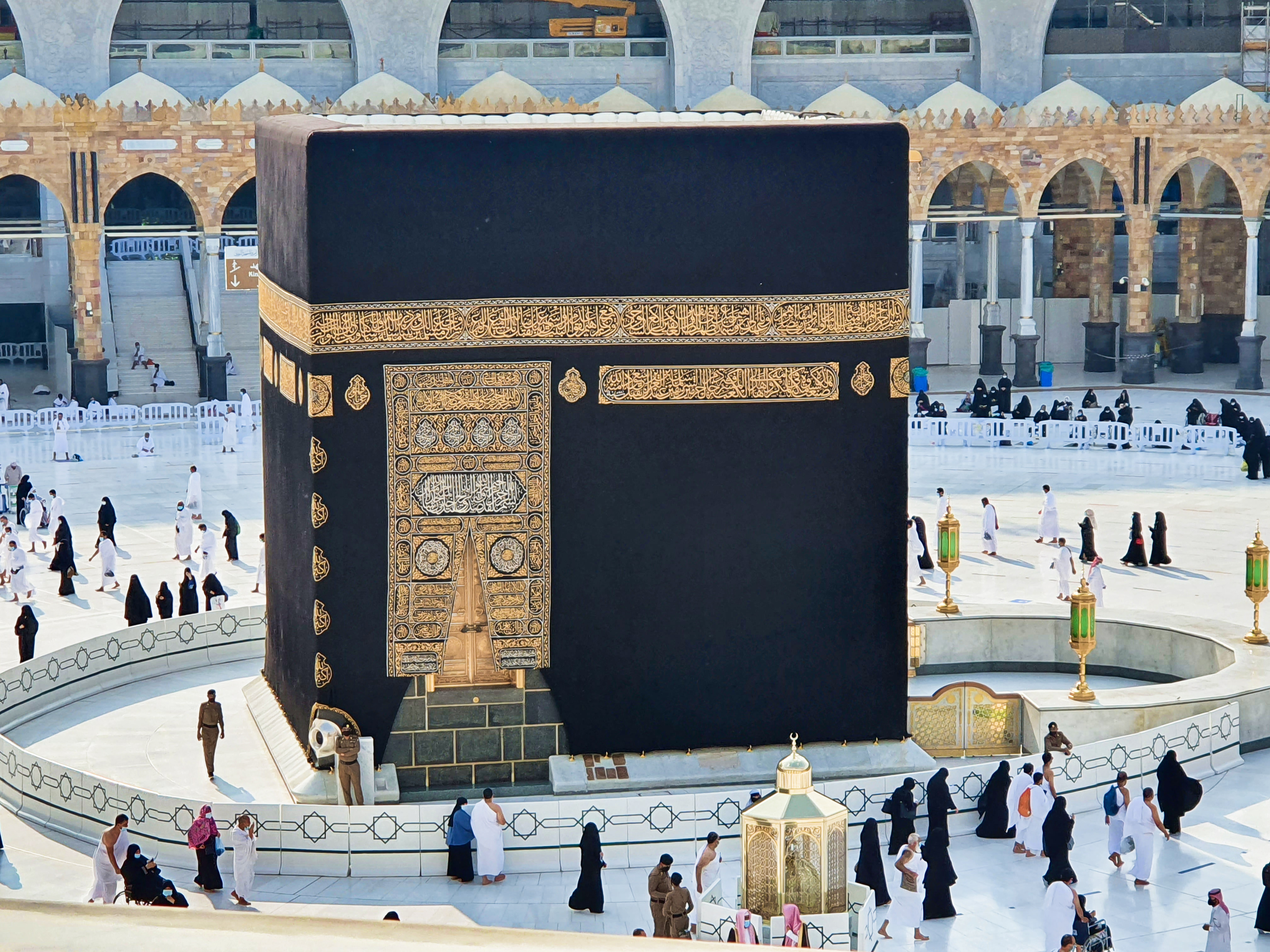
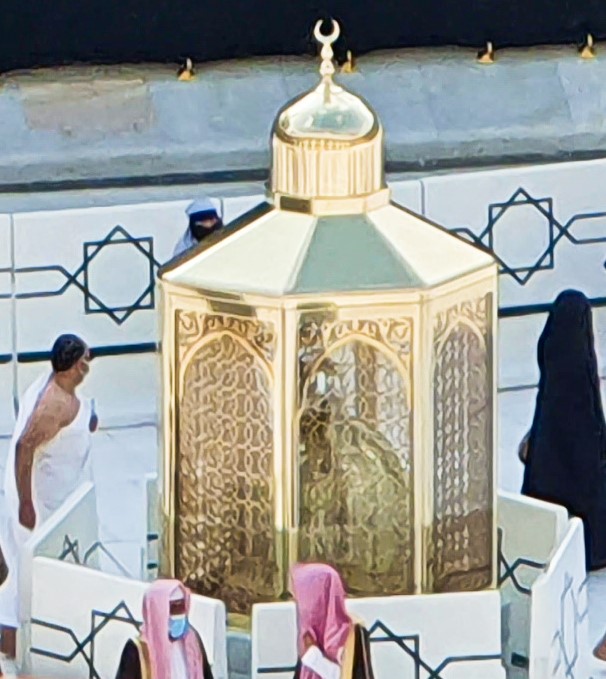
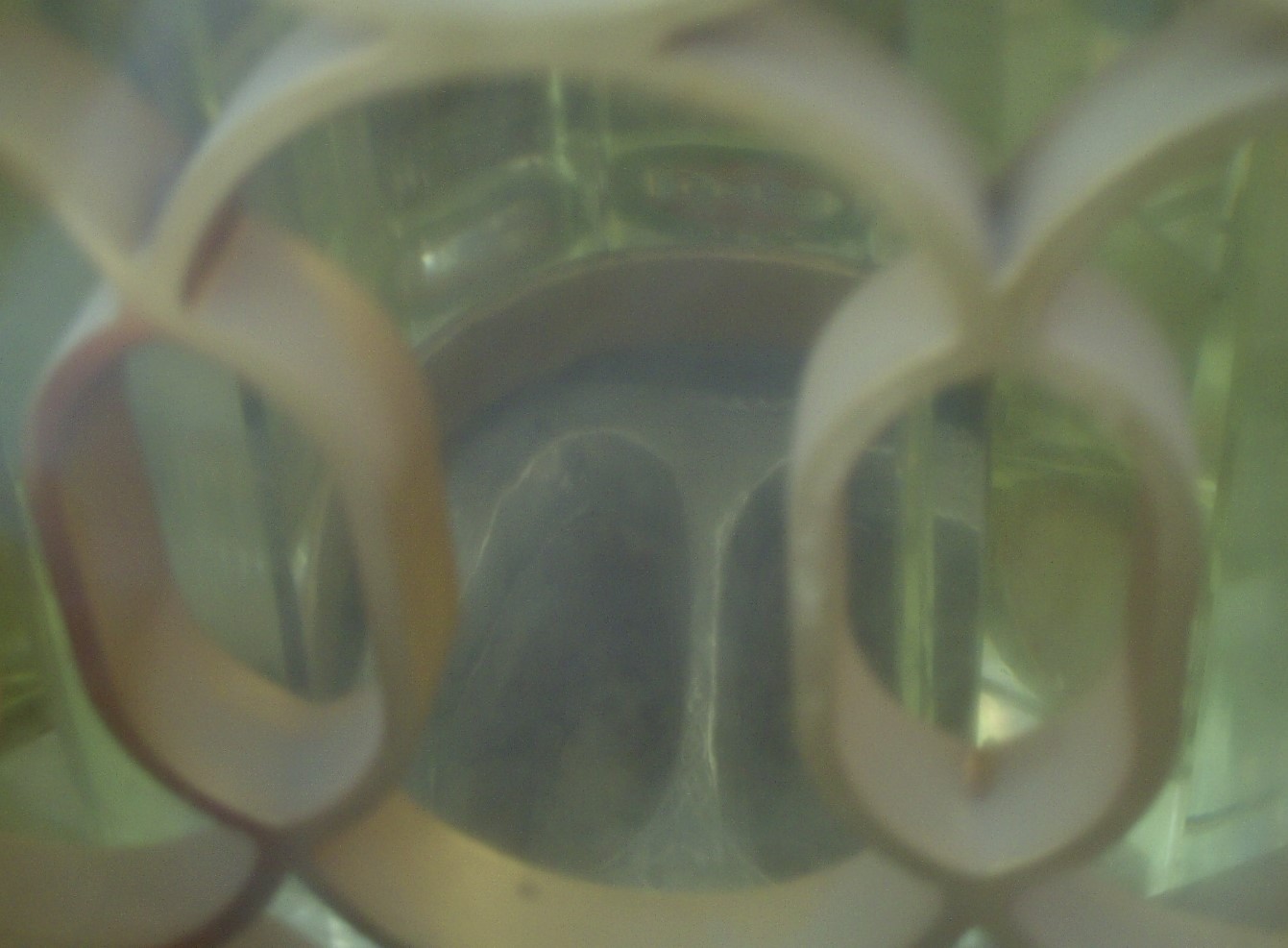
The “Station of Abraham” in Mecca, in the haram, preserving Abraham’s footprints inside a golden-metal structure
CC Wikimedia commons 1 & Wikimedia commons 2
The Jewish tradition of the “place of Abraham” in Jerusalem
The Bible features another tradition that is interpreted within a Jewish context as regarding the “place of Abraham”. In Genesis 22, this place is described as the summit of Mount Moriah, which Jewish tradition identifies with Jerusalem[7]. It was here that God asked Abraham to sacrifice his son Isaac. According to this tradition (e.g., Book of Jubilees 18,8), Abraham built an altar on this site, around which Jerusalem later developed. This very location is where the temple of Jerusalem was built—both the first temple (Solomon’s) and the second (Herod’s). The theme of the “place of Abraham” appears in the Bible in connection with the sacrifice of his son and in other contexts. The term māqōm (meaning “place” or “standing place” in Hebrew or Aramaic) is built on the root QWM (קוּם), identical to the Arabic root.
We end up with two very similar, but absolutely incompatible traditions:
Jewish tradition
The “place” of the biblical Abraham is in Jerusalem, which is why the Jerusalem temple was built there. From the biblical perspective, the Islamic tradition can only be seen as an invention.
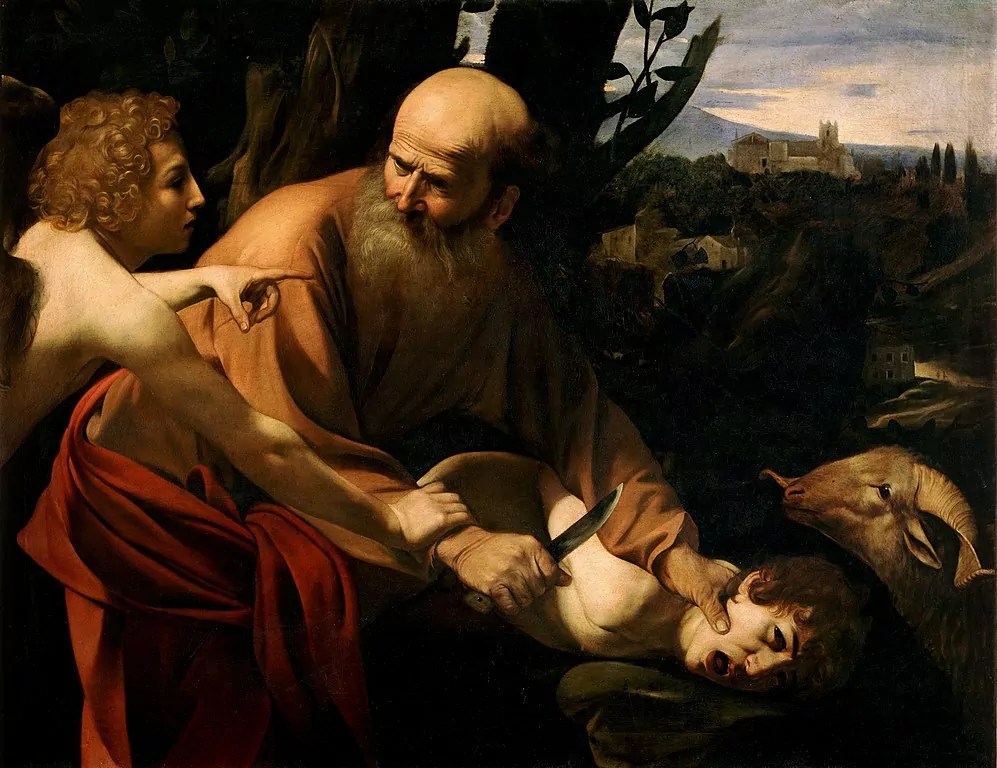
CC Wikimedia Commons
Islamic tradition
The “place” of the Islamic Abraham is in Mecca, which is why the Kaaba was built there. From the Islamic perspective, the biblical tradition can only be seen as an invention.
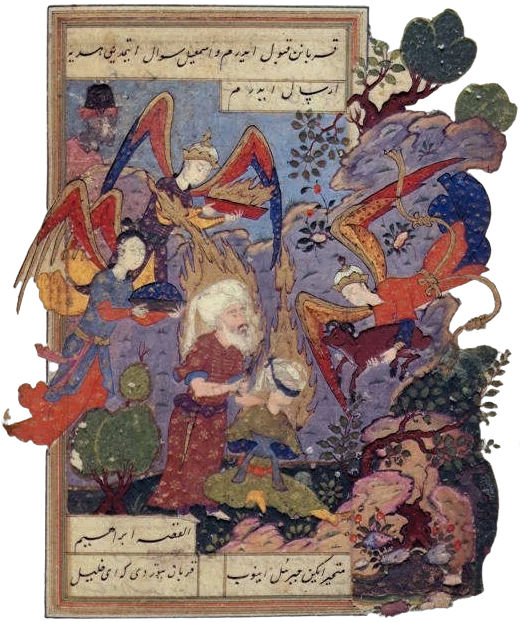
CC Wikimedia Commons
The contradiction of the Quran (or rather of its interpretation according to Islam)
However, the Quran refers to the temple of Jerusalem in three very specific and unequivocal instances. The Islamic interpretation supports this designation. According to our understanding of the Quran, the temple of Jerusalem is also referenced in numerous other instances (for example as masjid al ḥarām, and al bayt, “the house”, “the temple”), although the Islamic interpretation posits them as referring to Mecca or its Kaaba.
Q3,37-39: “(37) So her Lord accepted her with good acceptance and caused her to grow in a good manner and put her in the care of Zechariah. Every time Zechariah entered upon her in the prayer chamber [miḥ’rāb[8], sanctuary], he found with her provision. He said, ‘O Mary, from where is this [coming] to you?’ She said, ‘It is from God. Indeed, God provides for whom He wills without account[9].’ (38) At that, Zechariah called upon his Lord, saying, ‘My Lord, grant me from Yourself a good offspring. Indeed, You are the Hearer of supplication’. (39) So the angels called him while he was standing in prayer in the chamber [miḥ’rāb], ‘Indeed, God gives you good tidings of John, confirming a word from God and [who will be] honorable, abstaining [from women], and a prophet from among the righteous’”.
Q19,11: “So he [Zechariah] came out to his people from the prayer chamber [miḥ’rāb, sanctuary[10]] and signaled to them to exalt [God] in the morning and afternoon”.
The Quran, according to its Islamic interpretation, presents two significant figures of Islam who frequented the Jerusalem temple: the prophet Zechariah (Zakariyya) and Mary (Maryam, the mother of Jesus), who lived and was raised there. The mention of the prophet David (Dawud) also revering the “sanctuary” [miḥ’rāb] further emphasizes the devotion of these figures (Q38,21-22[11]). This implies that they did not denounce what Islam considers a false tradition locating the “place of Abraham” in Jerusalem, on Mount Moriah—the reason the “sanctuary” mentioned in the Quran was built there. By frequenting this “sanctuary”, namely the temple in Jerusalem, they validate the legitimacy of the traditions that designate it as the “place of Abraham”, thereby challenging the Islamic tradition that asserts this place should be in Mecca.
Added to this are other considerations from Islamic tradition that also legitimize Jerusalem, thus also legitimizing its “place of Abraham”, since it is the reason why the city was built there:
- Jerusalem was chosen as the initial prayer direction by Muhammad for the first Muslims, before being replaced by Mecca.
- The site of the temple is known as bayt al-maqdis, meaning the “house of the holy place” or “temple of the holy place”.
- None of the prophets of Islam who belonged to the Jewish people (“Sons of Israel”) and were familiar with Jerusalem and its temple—particularly Solomon (Sulayman), Zechariah (Zakariyya), John the Baptist (Yahya), and Jesus (‘Issa)—are said, according to Islamic tradition, to have denounced the false tradition of the “place of Abraham” located in Jerusalem, nor is Mary (Maryam) mentioned as having done so. None of them is said to have had any devotion to the “place of Abraham” in Mecca, nor any knowledge of this fundamental aspect of Islamic belief.
- Overall, the biblical tradition of the “place of Abraham” in Jerusalem is never denounced as a false tradition by Muslim tradition—not even in the accounts of the Islamic prophet’s “night journey”, during which he is said to have made a one-night journey from Mecca to the Temple Mount in Jerusalem (the “place of Abraham” itself), from where he ascended into the heavens to meet, among others, Abraham himself, who, as an Islamic figure, should have rejected the Jerusalem tradition.
We are confronted with a flagrant contradiction in the Quran—or rather in the Islamic tradition and its interpretation of the Quran. On one hand, it indirectly locates the “place of Abraham” in Jerusalem, which serves as the reason for its foundation and the construction of the temple, on the other, it locates this place in Mecca, justifying the construction of the Kaaba.
The common-sense hypothesis: Mecca’s “Abrahamic” status is a late invention
Islamic tradition struggles to explain this contradiction:
- One possibility is to twist history by claiming that Jews and Christians invented the biblical tradition of Abraham’s place in Jerusalem after Mary had lived there, following John the Baptist and Jesus. This is absolutely implausible given the age of the texts, including ancient manuscripts of the Book of Genesis and its commentaries. However, this narrative would align with the Islamic theory of the falsification of the biblical text by Jews and Christians.
- Alternatively, one could imagine that God initially established the “place of Abraham” in Jerusalem. This would imply that the Jewish prophets of Islam mentioned above, along with Mary, recognized this as legitimate and did not seek to honor Abraham in Mecca. In this scenario, God would have then transferred the “place of Abraham” from Jerusalem to Mecca, revealing it to his final prophet, Muhammad, while effectively disavowing his predecessors.
Common sense suggests another hypothesis: Jerusalem, or more specifically the site of its temple, was considered the “place of Abraham” by Muhammad and was initially designated by Quranic preaching. The Islamic tradition of the “place of Abraham” in Mecca, along with the city’s “Abrahamic” status, was invented much later.
The “evident signs” that identify the “place of Abraham” in the Qur’an (Q3:97, āyātun bayyinātun) should then be understood not as physical traces such as Abraham’s footprints but as “clear verses”—as is interpreted in the Islamic understanding of the same expression in Q24,34; Q26,2; Q27,1 and Q28,2. The verses in question likely refer to the Bible (Gn 22).
This hypothesis accounts for the contradictions in the Islamic narrative regarding Mecca, including those outlined in this article and many others. It also helps explain the sacred status of Jerusalem in Islam, which the Islamic narrative, upon closer examination, primarily justifies by the episode of the night journey and the unusual direction of prayer that was initially directed towards Jerusalem before being changed to Mecca. If we extend this hypothesis further, we might even consider that the entire narrative of Abrahamic and Islamic Mecca has been invented, including its status as the origin of Islam.
Building on this hypothesis, the following chronology seems plausible. It outlines the history of the Quran and its interpretation within early Islam and later Islam:
- Initial Quranic preaching focused on Jerusalem, with the prayer direction oriented towards the East (Christian prayer, as probably described in Q2,115; 142; 144; 177) changed to Jerusalem, the site of masjid al ḥarām (the “sacred mosque”, or literally, the “forbidden place of prostration”[12]).
- Circumstances led to a need to disregard the sacredness of Jerusalem and emphasize the Arab character of nascent Islam, which was at odds with its evident Judeo-Christian context: the raising of the Jerusalem temple around 638, dashed apocalyptic expectations, a break with initial Judeo-Christian circles, and the emergence of powerful Arab leaders seeking to assert a new kind of authority.
- Mecca’s Abrahamic status was invented in response to these developments, thereby “arabizing” his figure and legitimizing the Arab leaders’ Ishmaelism as independent from the Judeo-Christian context.
- The invention of Mecca as the birthplace of Islam followed, marking the birth of its prophet and the revelation of the divine word. The Quran was reinterpreted as mentioning Mecca instead of Jerusalem. External narratives such as hadiths about Abraham in Mecca were invented to support the reinterpretation. This also involved the creation of traditional narratives that Islamized Jerusalem, such as the night journey and the original qibla towards Jerusalem.
- The divinization of the Quran led to the prohibition of altering the four references to the “sanctuary” of Jerusalem[13]. As a result, a contradiction emerged between Abrahamic Mecca and Abrahamic Jerusalem.
The hypothesis aligns with and complements recent studies[14] on the Quranic text and its elaboration process, the politico-religious context of the origins of Islam, the central status of Jerusalem in proto-Islam, and the formalization of Islam within the caliphal milieu, primarily during the Abbasid period, which is quite distant from its actual origins.
However, the historicity of Islamic Mecca remains a contentious issue for many scholars and specialists, as it seems inconceivable at first glance that it could be nothing more than literary fiction. Nonetheless, the convergence of historical and Quranic studies is likely to lead many to conclude that the Islamic traditions describing Mecca as the “place of Abraham”, the origin of Islam, and the site of the birth and preaching of its prophet—as well as the Islamic interpretation of the Quran in this context—are, in fact, later inventions.
Bibliography
BJERREGAARD MORTENSEN, Mette
- Sura 19 explanation in Mohammad Ali AMIR-MOEZZI and Guillaume DYE (Eds.), Le Coran des historiens, Cerf, Paris, 2019, vol.2a
BOISLIVEAU, Anne-Sylvie
- Sura 38 explanation in Mohammad Ali AMIR-MOEZZI and Guillaume DYE (Eds.), Le Coran des historiens, Cerf, Paris, 2019, vol.2b
CRONE, Patricia
- Meccan Trade and the Rise of Islam, Gorgias Press, 1987
- “How did the Quranic Pagans make a living?”, in Bulletin of the SOAS, Vol. 68, No. 3, 2005
DE PRÉMARE, Alfred-Louis
- Les Fondations de l’Islam, Seuil, Paris, 2002-2009
DYE, Guillaume
- “Le corpus coranique : contexte et composition” in Mohammad Ali AMIR-MOEZZI and Guillaume DYE (Eds.), Le Coran des historiens, Cerf, Paris, 2019, vol.1
- “Le corpus coranique : questions autour de sa canonisation” in Mohammad Ali AMIR-MOEZZI and Guillaume DYE (Eds.), Le Coran des historiens, Cerf, Paris, 2019, vol.1
- “Le Coran et le problème synoptique” in M. Gross & Robert Kerr (Eds.), Die Entstehung einer Weltreligion VI, Inârah 10, Schiler & Mücke, 2020
- “The Qur’anic Mary and the Chronology of the Qur’an,” in Early Islam: The Sectarian Milieu of Late Antiquity, Éditions de l’Université de Bruxelles, 2023
ELLIS, Paul D. D’A.
- “Jerusalem, City of Islam”, Academia, 2022
FEHERVARI, Geza
- miḥ‘rāb article in Encyclopaedia of Islam, vol.7, Brill, 1993
GALLEZ, Édouard-Marie
- Le Messie et son prophète, vol.1&2, Éditions de Paris, Paris, 2005-2010
HOYLAND, Robert
- Seeing Islam as others saw it, Darwin Press, 1997
KERR, Robert
- “Die blauen Blumen von Mekka”, in Markus GROSS & Karl-Heinz OHLIG (Eds.), Die Entstehung einer Weltreligion III, Inârah Volume 7, Schiler & Mücke, Berlin, 2014
- “« Farüqter Heiland » et le Ḥajj original à Jérusalem, quelques remarques sur le messianisme de l’islam naissant” in Robert KERR, Markus GROSS & Karl-Heinz OHLIG (Eds.), Die Entstehung einer Weltreligion VI, Inârah volume 10, Berlin, Schiler & Mücke 2020
LAFONTAINE, Odon
- “A barrier between the two seas”, Academia, 2024 (French version in 2020)
- The Great Secret of Islam, Kindle, 2024
- “A Nazarene Reading of the Quran, Part III: Jerusalem & Mecca”, 2020-2024 (To be published)
SHOEMAKER, Stephen
- A Prophet has appeared, University of California Press, 2021
- “The Qur’an’s Holy House: Mecca or Jerusalem?”, in M. GROSS & Robert KERR (Eds.), Die Entstehung einer Weltreligion VII, Inârah 11, Schiler & Mücke & Mücke, 2023
SEGOVIA, Carlos
- Sura 3 explanation, in Mohammad Ali AMIR-MOEZZI and Guillaume DYE (Eds.), Le Coran des historiens, Cerf, Paris, 2019, vol. 2a
Notes
[1] Patricia CRONE, Meccan Trade and the Rise of Islam, Gorgias Press, 1987 ; “How did the Quranic Pagans make a living?”, in Bulletin of the SOAS, Vol. 68, No. 3, 2005 ; Édouard-Marie GALLEZ, Le Messie et son prophète, vol.1&2, Éditions de Paris, Paris, 2005-2010; Odon LAFONTAINE, “A ‘barrier’ between the two seas”, Academia, 2024 (French version in 2020).
[2] CRONE, Meccan Trade…, op. cit.
[3] GALLEZ, Le Messie…, op. cit.
[4] See Alfred-Louis DE PRÉMARE, Les Fondations de l’Islam, Seuil, Paris, 2002-2009 for a detailed report on the building of an “oratory” on the Temple Mount around 638. See also Robert HOYLAND, Seeing Islam as others saw it, Darwin Press, 1997, and Stephen SHOEMAKER, A Prophet has appeared, University of California Press, 2021, for detailed analyses of sources describing the Arab-Jewish alliance and its rebuilding of the temple in Jerusalem (notably Letter 14, from Maximus the Confessor; The Armenian Chronicle of 661 attributed to Sebeos; The Spiritual Meadow, Appendix to the Georgian Version, from John Moschus; Edifying Tales and Homily on the Lord’s Passion, from Anastasius of Sinai; The Apocalypse of Rabbi Shimon b. Yohai). Deformed remnants of this alliance can also be found in Islamic tradition (see Odon LAFONTAINE, The Great Secret of Islam, Kindle, 2024).
[5] Robert KERR, “Die blauen Blumen von Mekka”, in Markus GROSS & Karl-Heinz OHLIG (Eds.), Die Entstehung einer Weltreligion III, Inârah Volume 7, Schiler & Mücke, Berlin, 2014, “« Farüqter Heiland » et le Ḥajj original à Jérusalem, quelques remarques sur le messianisme de l’islam naissant” in Robert KERR, Markus GROSS & Karl-Heinz OHLIG (Eds.), Die Entstehung einer Weltreligion VI, Inârah volume 10, Berlin, Schiler & Mücke 2020; Paul D. D’A. ELLIS, “Jerusalem, City of Islam”, Academia, 2022; LAFONTAINE, The Great Secret…, op.cit., “A Nazarene Reading of the Quran, Part III: Jerusalem & Mecca”, 2020-2024 (To be published); Stephen SHOEMAKER, “The Qur’an’s Holy House: Mecca or Jerusalem?”, in M. GROSS & Robert KERR (Eds.), Die Entstehung einer Weltreligion VII, Inârah 11, Schiler & Mücke & Mücke, 2023
[6] Q2,125: “And when we made the house [temple, Kaaba according to Islamic interpretation] a place of return for the people and of security. And take, from the standing place of Abraham a place of prayer.”
Q3,96-97: “(96) Indeed, the first house [idem] established for mankind was that at Bakka – blessed and a guidance for the worlds. (97) In it are clear signs [such as] the standing place of Abraham. And whoever enters it shall be safe. And [due] to God from the people is a pilgrimage to the house [idem]”.
Besides, Q14,35 & 22,26 could also interpreted as indirectly refering to the “place of Abraham”.
[7] Gn 22,2: “‘Take your son’, God said, ‘your only son Isaac, whom you love, and go to the land of Moriah. Offer him there as a burnt offering on one of the mountains, which I will show you’.”
[8] See the article miḥ‘rāb in Encyclopaedia of Islam, vol.7, Brill, 1993, p.7.
[9] This tradition is likely derived from those of the Gospel of James (7:2-3; 8:1-2), which recounts Mary’s childhood in the temple of Jerusalem until she was twelve, during which she received “food from the hand of an angel”. Carlos SEGOVIA, in his analysis of Sura 3 (in Mohammad Ali AMIR-MOEZZI and Guillaume DYE (Eds.), Le Coran des historiens, Cerf, Paris, 2019, vol. 2a, p. 144), characterizes the Gospel of James as one of the sources of these traditions, particularly following Guillaume DYE’s work on the subject (most recently: “The Qur’anic Mary and the Chronology of the Qur’an,” in Early Islam: The Sectarian Milieu of Late Antiquity, Éditions de l’Université de Bruxelles, 2023). However, he does not emphasize the implicit identification of the “sanctuary” with the Temple of Jerusalem.
[10] Mette BJERREGAARD MORTENSEN, in her analysis of Sura 19 (Le Coran des historiens, op.cit., vol.2a, p.738) corroborates our identification of the “ sanctuary ” with the temple of Jerusalem, and she also supports this identification for Q3:37-39.
[11] As the Jerusalem temple had not yet been built in David’s time (it would be by his son Solomon), miḥ‘rāb here designates its equivalent, the “tent-sanctuary”, or, more probably, the entire area where it stood, delimited by the walls mentioned in the verse. Anne-Sylvie BOISLIVEAU in her analysis of Sura 38 (Le Coran des historiens, op.cit., vol.2b, p.1273) seems to overlook the particular nature of the miḥ‘rāb, suggesting that the “disputants” would simply have broken into “his [David’s] home”.
[12] See GALLEZ, op. cit. , ELLIS, op.cit., KERR’s “Farüqter…”, op.cit., SHOEMAKER’s “The Quran…”, op.cit., and LAFONTAINE’s The Great Secret…, op.cit.
[13] The Quran indeed underwent a process of normalization, including the redaction or editing of “un-Islamic” verses. The case of the “Satanic verses” is particularly famous: Islamic tradition has preserved traces of the original version of Q53:19-20, which was ultimately redacted, as quoted in Al-Tabari’s Tarīkh, vol. VI (for more on this, see GALLEZ, op. cit., vol. 2, pp. 43-46, and LAFONTAINE, The Great Secret…, pp. 142-143). The Quran’s editing process is also analyzed by Guillaume DYE (see his contribution in Le Coran des Historiens, op. cit., or his article “Le Coran et le problème synoptique” in M. Gross & Robert Kerr (Eds.), Die Entstehung einer Weltreligion VI, Inârah 10, Schiler & Mücke, 2021).
[14] Le Coran des historiens, op.cit., and the expanded edition of vol.1 under the title Histoire du Coran, Cerf, Paris, 2022.
SUPPORT MY WORK
(click on button or image)


 The great secret of Islam
Leave a comment